Hidden talent, real barriers: The road to Glasgow 2026
For Papua New Guinea's Regina Edward, getting to training once meant swimming for almost half an hour through floodwater. For Ghanaian wheelchair racer Nkegbe Botsyo, competing internationally has sometimes meant using the same equipment for five or six years while waiting for help to replace it.
Their experiences illustrate some of the challenges facing Para athletes across the Commonwealth, where the determination to compete is not always matched by access to the facilities, equipment and financial support needed to succeed.
Both stories feature in Closing the Gap: Para sport for everyone, everywhere, a documentary commissioned by Commonwealth Sport and produced by researchers and filmmakers at the University of the West of Scotland (UWS).
Filmed during the GAPS pre-Games training camp in Ayr in July 2026, ahead of the Glasgow 2026 Commonwealth Games, it brings together the experiences of athletes and coaches from across the Commonwealth, examining some of the challenges they face and the difference that targeted support can make.
For Edward, those challenges have included simply reaching a place where she can train.
The Papua New Guinean Para athlete lives several hours from the city and had moved to stay with her aunt to pursue her sporting ambitions. During a visit home, however, prolonged flooding left her unable to return.
Her coach, Jacky Travertz, recalls in the documentary how they became increasingly concerned when they could not contact her. Almost three months passed before Edward was able to make the journey, eventually swimming through floodwater for 20 to 30 minutes to reach transport that could take her back to the city.
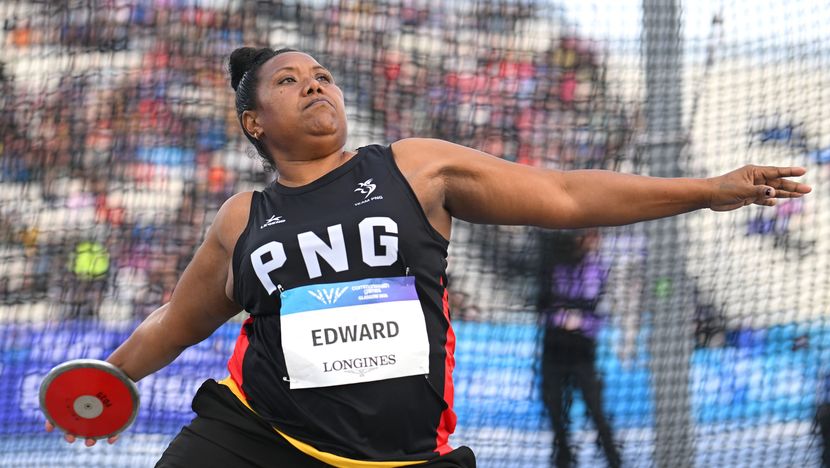
Edward's sporting career stretches back to the Delhi 2010 Commonwealth Games, where she competed in Para powerlifting. She subsequently moved into Para athletics, representing Papua New Guinea internationally before returning to the Commonwealth Games in Glasgow, this time in the discus.
For Botsyo, a three-time Paralympian and four-time Commonwealth Games competitor who represented Ghana in the men's T54 1500m at Glasgow 2026, the difficulties have centred on accessing suitable racing equipment.
“I have been competing for Ghana for almost 20 years,” he explains in the documentary. “I have been stuck with equipment for sometimes five or six years before I will be able to get from friends and loved ones who believe in what we are doing.”
Racing wheelchairs are specialist pieces of equipment, and their condition and suitability are important considerations for athletes competing at the highest level. Replacing or maintaining them can present a considerable financial challenge.
Botsyo believes that investment must extend beyond providing athletes with opportunities to compete.
“Investment is equipment. Investment is giving us a good platform to train in, a good competition and good nutrition.”
His point is reinforced by Papua New Guinea coach Travertz, who argues that too often the focus is on getting athletes to international events rather than providing the support they need in the months and years beforehand.
“Most of the time support comes when we are traveling for competition, but the main part is the preparation.”
Access to coaching, appropriate equipment, nutrition, physiotherapy and sports science can all influence performance, yet those resources are not equally available across the Commonwealth.
The GAPS programme was established to help address some of these inequalities, working with universities and sporting partners to create opportunities for Para athletes and coaches from developing and emerging Commonwealth nations.
Ahead of Glasgow 2026, the UWS campus in Ayr welcomed 54 athletes and coaches from 15 Commonwealth nations for a final training camp. Participants in Para athletics and Para powerlifting received specialist support while preparing for the Games, with the opportunity to share knowledge and experiences with competitors from different backgrounds.
For Mauritius wheelchair racer Noemi Alphonse, those exchanges are an important part of the programme.
“Being with different athletes of different culture, countries and different disabilities, it helps me to grow as an athlete,” she says.
The benefits, she explains, do not necessarily end when the camp finishes.
“I know that when I am sharing my story with another athlete, he's going home with my story and sharing it with other team mates. And I am doing the same in Mauritius. This is a big thing for us.”
That exchange of knowledge is particularly valuable where athletes and coaches may have limited opportunities to work alongside specialists or learn from their counterparts in other countries.
Across the wider GAPS programme, 62 Para athletes competed at Glasgow 2026, with 11 winning medals and many more achieving personal or season's best performances.
The documentary also examines the social barriers that continue to limit participation.
Ugandan coach Kenneth Ssekiranda describes how negative attitudes towards disability can prevent children from becoming involved in sport at all.
“People even try to hide their kids because they've got difficulties in their bodies, so they hide those kids thinking it's a shame to the family.”
For some aspiring athletes, overcoming attitudes towards disability can be as important as obtaining the equipment or coaching they need.
Richard de Groen, Commonwealth Sport's Head of Programmes and Investment, acknowledges the scale of the challenge.
“If you have a disability, then there is a huge challenge associated with participation in sport. There is a lot of stigma, there's a lot of barriers, there is a huge amount of costs and of course the resources generally don't go to people with a disability.”
The film forms part of a wider research programme at UWS examining the relationship between major sporting events and disability rights. By placing athletes' experiences at the centre of the documentary, its creators hope to encourage discussion about what is needed to make sporting opportunities more widely available.
The documentary was also screened during the Commonwealth Heads of Government Meeting in Antigua and Barbuda, bringing those experiences to the attention of policymakers and government representatives.
Commonwealth Sport President Dr Donald Rukare has called on governments to make inclusive sport part of their national policy frameworks, helping to create opportunities for more people with disabilities to participate.
For athletes such as Edward and Botsyo, access to support can make a substantial difference, not simply to their ability to reach major competitions but to how effectively they can prepare for them.
Botsyo has spent much of his sporting career challenging perceptions of disability. His achievements have given him a platform, but it is the change in how people respond to him that he particularly values.
“For me this has been my winning. Seeing people following us, people listening, people can relate to us. People treat us as athletes not a disability."