

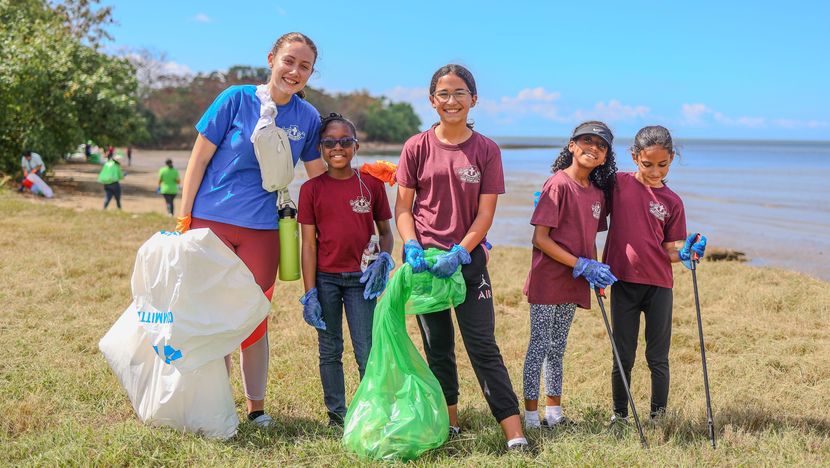
Commonwealth Clean Oceans Plastics campaign closes in on one million.
Communities across the Commonwealth are close to the target of preventing 1m pieces of plastic from entering our oceans, rivers and waterways ahead of Glasgow 2026.
The Royal Commonwealth Society and Commonwealth Sport partnered to deliver the Commonwealth Clean Oceans Plastics Campaign alongside the King's Baton Relay, with the aim of preventing one million pieces of plastic from entering Commonwealth waterways before the Glasgow 2026 Commonwealth Games.
The campaign has brought together young people, athletes, schools, environmental groups and local volunteers across dozens of Commonwealth nations and territories.
With Scotland's clean-up planned for 21 July, the million mark remains within reach in the campaign's final days.
The involvement with the clean-ups has varied enormously, reflecting the different ways communities chose to take part.
Kiribati has recorded one of the campaign's largest totals, with over 5,600 volunteers across six sites supporting the pick-up. School collection drives in Antigua and Barbuda provided a great opportunity for young people to show what can be achieved when environmental action becomes a shared national effort.
Cameroon's contribution grew well beyond its first clean-up linked to the Baton with three further collections taking place across the country. A strong partnership with We-Recycle Mauritius produced a similar result, with two events collecting a substantial volume of plastic between them.
Mozambique took a different approach. The Blue Coins programme rewarded communities for the waste they removed, connecting environmental action with local economic value as well as environmental benefit.
The practical realities of running a campaign across such a wide range of countries and communities was always going to be a challenge, but with the support of trusted and established local partners sourced by Commonwealth Secretariat, the collective nations have stepped up to the challenge.
The Commonwealth spans small island states, large coastal nations, inland communities, major cities and some of the world's most climate-vulnerable places. Plastic pollution does not look the same everywhere, and neither does the response.
Schools led the effort in some communities. Elsewhere, long-standing environmental organisations, youth groups, divers and local networks took the lead. Clean-ups took place on beaches, beside rivers, along coastlines and in the water itself.
Some were one-off events tied to the Baton's visit. Others sparked activity that continued after the Relay had moved on.
A high collection total can reflect powerful community mobilisation, but it can also reveal the scale of pollution facing our world.
With Scotland's clean-up ongoing and a few more totals to be collated, the campaign target of preventing one million pieces of plastic from entering Commonwealth oceans, rivers and waterways before Glasgow 2026 is within reach.
