Dear Green Place delivers a greener Games for decades to come
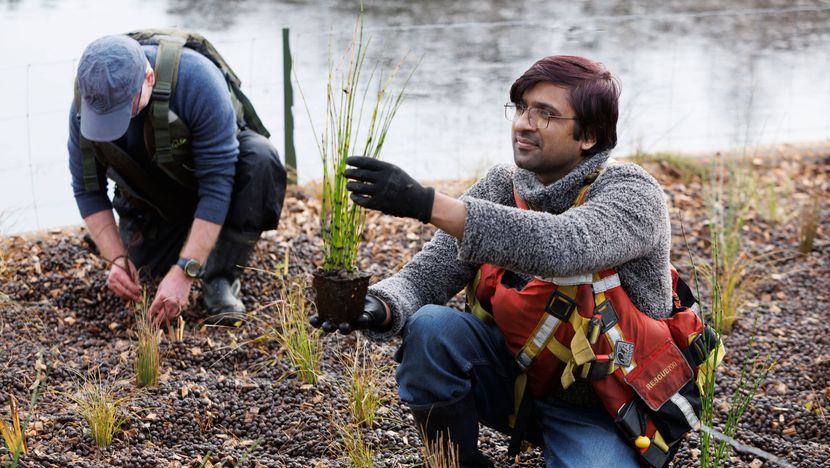
The Glasgow 2026 Commonwealth Games will live on in five city parks with the installation of floating islands for wildlife. Covering 248 square metres, the islands will feature a range of plants native to Scottish aquatic habitats, providing safer nesting spaces for birds, helping to improve pond water quality with structures designed to last more than 20 years.
With the Games a celebrated success for the city, the five floating islands are a gift back from the organisers to communities at Victoria Park, Elder Park, Richmond Park, Queen’s Park and Hogganfield Loch. Major events require local support, and through partnership-working with Glasgow City Council and Bupa, Glasgow 2026 is ensuring that local impact and sustainability are at the heart of the legacy the Games leaves in the city.
This biodiversity project is the culmination of Glasgow’s commitments to a Greener Games with significant environmental achievements evidenced in Glasgow 2026’s independent impact evaluation published earlier this month. The organisers of Glasgow 2026 set out to deliver a new format event that treads lighter on the host city.
Glasgow 2026 challenged the conventions of hosting major international sporting events, demonstrating that world-class competition can be delivered without the environmental footprint traditionally associated with the Games. In a Commonwealth Games first, all competition venues were powered by renewable electricity, with the 11-day event breaking from the traditional reliance on new construction by making use of existing venues and accommodating athletes in hotels.
This approach extended across Games operations, with 96% of temporary venue infrastructure hired for reuse, electric and hybrid vehicles making up two-thirds (66%) of the Games fleet, and zero waste sent to landfill. A further 74% of Games-owned assets were recycled, donated or resold, reinforcing Glasgow 2026's ambition to establish a more sustainable blueprint for the future of major sporting events.
Supplied by Scottish company Biomatrix Water Solutions, the islands use plants to absorb excess nutrients from the water, helping reduce the build-up of algae. Roots beneath the islands will shelter aquatic wildlife, while the planted surface will give birds safer places to nest. Glasgow City Council will take ownership and oversee the installation and ongoing care of the islands which are due to last for more than 20 years.
Local schools and Friends of the Park groups will be involved in planting the floating islands with a range of learning activities. The project will also give young people and volunteers a chance to help look after wildlife in their own neighbourhoods, supporting the city’s ambitions for a greener Glasgow.
George Black CBE, Chair of Glasgow 2026, said: “The Games was experienced across the city for 11 days, but our commitment to Glasgow goes much further. As an event organiser, we wanted to give back to the host city and the communities that made Glasgow 2026 so special.
We made decisions in designing this Games to reduce our environmental impact and deliver on our Story of Change. As the first event as part of Commonwealth Sport’s reimagined model, we are proud to have worked with Glasgow City Council and Bupa to leave a legacy in the communities that welcomed the Commonwealth so warmly.”
Fiona Bosman, Group Brand Director at Bupa, Official Healthcare Principal Partner, said: “These floating islands will give wildlife new homes in five city parks, giving local people opportunities to care for their environment for decades to come. As an Official Games Partner, Bupa is proud to support a project where children and young people involved in the initial planting could return as adults in years to come and see something they helped create still flourishing in their city.
In Glasgow 2026, we saw a Games with deep commitments to social impact and inclusion, and by investing in green spaces we know we can have a positive impact on the health of our communities.”
One of Glasgow 2026’s core environmental commitments was to deliver a low-carbon operational footprint to reduce emissions throughout Games planning and delivery and demonstrate a model for how major events can make more sustainable decisions. The Games evaluation found that the final carbon footprint for Glasgow 2026 was one fifth of the reported residual carbon footprint of Birmingham 2022, the most recent edition of the Commonwealth Games. An estimated 19,000 tonnes of carbon dioxide equivalent emissions (tCO₂e) were avoided through decisions made by organisers during pre-Games planning as part of continual improvements to the preparations.
The commitment to a Greener Games will extend internationally to India, connecting Scotland’s legacy with the next host nation. Through Official Games Partner EDF, Glasgow 2026 has offset the 40,907 tCO₂e with carbon credits from a 100-megawatt wind farm in Jamnagar, Gujarat – the state hosting Amdavad 2030. The wind farm supplies renewable electricity to India’s grid, reducing reliance on more carbon-intensive power.
With the future of Commonwealth Sport movement secured with a 2030 host and renewed host pipeline, the carbon credits further the global impact of the Games which saw Commonwealth-wide environmental projects delivered through the King’s Baton Relay Clean Oceans Plastics Campaign. Communities across the 74 nations and territories came together to remove more than one million pieces of plastic (1,022,054) from waterways, rivers and oceans. The milestone was reached with a final clean-up on the River Clyde organised by Team Scotland.
Dr Donald Rukare, President of Commonwealth Sport, said: “Our commitment to sustainability forms a core pillar of our Commonwealth United strategy and is central to the future of the Games Movement. When nations of the Commonwealth work together, it is incredible to see the impact that can be realised. Scotland’s leadership has shown that major sport events can be delivered in a more environmentally sustainable format, and we hope to see this continue in future editions of our Games.”
Simone Rossi, Chief Executive Officer at EDF, Official Energy Partner, said: “With Amdavad announced as the host of the Centenary Commonwealth Games in 2030 we are pleased to support the Games’ commitment to delivering a more sustainable model for major events, which lies very closely to our heart. In our role as Official Energy Partner, we supported Glasgow 2026's sustainability ambitions by providing UK renewable-backed electricity to three competition venues.”
The Games celebrated Glasgow as the ‘Dear Green Place’ with the Opening Ceremony bringing Scotland’s landscape and plants into a living saltire garden, while Jackie Kay’s spoken word contribution to the Closing Ceremony celebrated the city and its identity. The free Live Site in Kelvingrove Park gave thousands of residents and visitors more ways to experience the Games. The floating islands will continue that connection with the city’s green spaces for decades to come.
Councillor Angus Millar, Glasgow City Council’s City Convener for Climate, said: “Climate and sustainability are of global importance, with Glasgow firmly committed to being at the forefront of this issue. Some of the greatest innovations and solutions come from working in partnership, and it has been an honour to work with Glasgow 2026 and Commonwealth Sport to secure a green legacy from these Games. Building on our hosting of COP26, this is a city that collaborates with event organisers to prioritise the environment in the decisions made when staging major competitions such as the Commonwealth Games. These initiatives will enrich our biodiversity and leave lasting benefits for our communities for decades to come.”
Glasgow 2026 in partnership with Commonwealth Sport achieved independent certification against ISO 20121, the international standard for managing events sustainably. Further details of the environmental outcomes achieved through Glasgow 2026 are set out in the Games Impact Evaluation.
Click here to read the Glasgow 2026 Sustainability Management Plan
Biomatrix Water Solutions
Biomatrix Water Solutions are an ecological technology and engineering company based in Forres, Moray, who specialise in the creation of habitats and the improvement of biodiversity, designing waterscapes and wastewater treatment solutions.
Each floating island will contain a mix of native plants:
- Caltha Pulastrus — Edging / Ground Cover
- Myosotis Pelustris — Edging / Ground Cover
- Veronica Beccabunga — Edging / Ground Cover
- Mentha Pulegium — Flowering / Low Cover
- Carex Piniculata — Semi Evergreen
- Carex Pseudocyperus — Semi Evergreen
- Juncus Inflexus — Semi - Halophyte
- Equisetum Hyemale — Evergreen
- Filipenda Ulmaria — Flowering
- Lychnis Floscuculi — Flowering
- Iris Psuedocoris — Flowering
- Lythrum Salicaria — Flowering
A Greener Games
The independent evaluation, published on Monday 2 November 2026, also reported against the three ambitious goals set by the Games; to host a low-carbon, circular and Zero Waste to Landfill Games and outlined the following achievements: :
- 66% of athlete bus mileage delivered using electric buses, and 88% reduction in fleet emissions compared with Birmingham 2022
- Zero waste to landfill achieved, with 69% less waste generated per ticket compared with Birmingham 2022.
- 100% of competition-venue menus featured carbon labelling, a Commonwealth Games first, with 46% of meals served being meat-free.
- 156,700 single-use plastic bottles estimated to have been avoided through the installation of 32 drinking-water refill stations.
- Renewable electricity agreements at three Glasgow Life competition venues designed to continue beyond the Games.
- Achieved global standard for event environmental best practice, ISO 20121
- More than one million pieces of plastic collected through the King’s Baton Relay Commonwealth Clean Oceans Plastic Campaign, delivered by Commonwealth Sport and the Royal Commonwealth Society.
Gujarat wind power project
Having already avoided an estimated 19,021 tonnes of CO₂e through innovative Games planning and delivery, Glasgow 2026 is taking further measures to invest in verified carbon credits supporting a 100 MW wind power project in Gujarat, India. Registered under Verra’s Verified Carbon Standard, the project generates renewable electricity to displace more carbon-intensive power, supporting India's transition to cleaner energy. With Gujarat set to host the next Commonwealth Games in 2030, the investment creates a symbolic link between Glasgow 2026 and the future of the Commonwealth Games, passing the baton from one host to the next and reinforcing a shared commitment to more sustainable international sport.