

The camp behind the Commonwealth podium
Before the Commonwealth gathers in Glasgow, a small Scottish seaside town will host one of the most important, and understated chapters of the 2026 Games story.
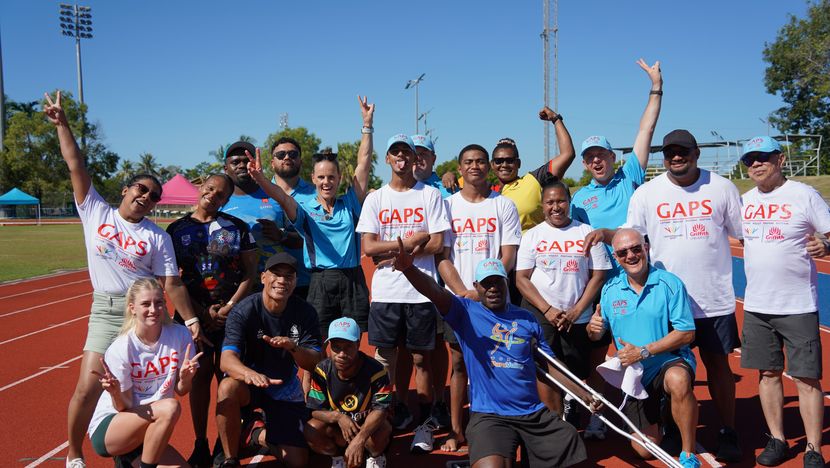
Caption: The attendees of the GAPS camp in Oceania earlier in 2026
On 16 July, 35 Para athletes and their coaches will arrive in Ayr for the final stage of their preparation for Glasgow 2026. They will spend nine days training at the University of the West of Scotland and Riverside Sports Arena, an eight-lane athletics facility more familiar to members of Ayr Seaforth Athletic Club than to international sporting stars.
On conclusion, they will leave for Glasgow. By then, some of the medals awarded at the Commonwealth Games may already have been shaped.
The athletes are part of GAPS, which stands for Gather, Adjust, Prepare, Sustain. It is Commonwealth Sport’s programme to help more nations develop Para athletes and create lasting systems around them.
The challenge is considerable. Fewer than a third of Commonwealth nations have traditionally been able to send Para athletes to the Games. Talent may be found everywhere, but access to classification, specialist coaching, adapted equipment, sports science and international competition is not.
For an athlete from a smaller or less well-resourced sporting nation, reaching a major Games can require far more than meeting a qualifying standard. It can depend on finding an accredited classifier, training with appropriate equipment, receiving specialist technical advice and gaining enough international experience to arrive prepared for the demands of competition.
GAPS exists to help close that distance.
More than 700 athletes and coaches have taken part in GAPS to date, with more than 100 progressing to a Commonwealth Games or Commonwealth Youth Games. Eight GAPS athletes won medals at Birmingham 2022, providing clear evidence that the programme can lead not only to participation, but to the podium.
Among them was Nigeria’s Goodness Nwachukwu, who won gold in the women’s discus and set a world record. She entered the programme as an athlete with potential and left Birmingham as a Commonwealth champion, becoming one of GAPS’ clearest success stories.
Her journey also shows what the programme can achieve. It is not simply a route into the Games. It is a pathway through which athletes can gain the experience, confidence and support required to compete at the highest level.
The athletes arriving in Ayr will include established international competitors alongside others preparing for the biggest event of their careers. Some will arrive with Paralympic and World Championship experience, while others will still be learning how to travel, train and compete as part of an international delegation.
Several will arrive with genuine medal ambitions. Nwachukwu is expected to be among the leading contenders in the women’s discus, while Nigeria’s Esther Nworgu brings Paralympic silver-medal experience to Para Powerlifting. Trinidad and Tobago’s Akeem Stewart is another proven global performer, having won silver at both the Paralympic Games and World Para Athletics Championships.
Mauritius’ Noemi Alphonse will also be one of the most recognisable athletes in the group. A world champion wheelchair racer, she has described the GAPS camp environment as feeling like a small Commonwealth Games, where athletes meet, train together and become familiar with the routines of international competition before the real event begins.
That familiarity can make a significant difference.
Preparing for a major championship involves much more than training. Athletes must adapt to new surroundings, competition schedules, classification appointments, transport arrangements and the routines of living and performing as part of an international delegation. Experiencing those demands before competition begins allows them to arrive in Glasgow with one less uncertainty to manage.
The camp is the final stage of a journey that has already stretched across several continents. Athletes have come through regional programmes in Africa and Oceania, as well as GAPS Assist support in the Caribbean, before gathering in Scotland.
The programme also draws on those who have already travelled the same route.
Sheryl James, the South African sprinter who competed at Birmingham 2022 and won bronze at the Tokyo Paralympic Games, and is among the athletes preparing in Ayr. Earlier this year, she also attended the GAPS camp in Stellenbosch where she attended as a coach to a young South African athlete, Masala Makatu, illustrating how the programme encourages experienced competitors to share their knowledge with the next generation while continuing their own careers.
This is one of the programme’s greatest strengths. Experience is not lost. It is carried forward and shared, even as athletes continue pursuing their own ambitions.
The result is a programme that invests not only in individual performances, but in the people and structures athletes return home to. Coaches gain knowledge they can use within their own nations. Athletes become examples for those who follow. National programmes begin to grow around them.
Training will take place at Riverside Sports Arena, a £8.5 million South Ayrshire Council facility used for national-level athletics competition. Its track includes embedded timing technology capable of recording professional-standard data across sprinting, endurance events and jumping disciplines.
The most valuable work, however, may happen away from the stopwatch.
Athletes will receive support with recovery, health, classification and competition preparation. Coaches will exchange ideas with colleagues from across the Commonwealth, while competitors who may have trained largely in isolation will spend nine days alongside people facing many of the same challenges.
Commonwealth Sport’s charitable arm, the Commonwealth Sport Foundation, supports the programme, while Bupa’s partnership with Glasgow 2026 also includes backing for the Ayr GAPS camp. Together, that support helps provide the medical expertise, planning, logistics and performance services that allow athletes to focus on competition.
It is an investment in the part of elite sport that spectators rarely see. The appointments, technical adjustments, travel arrangements and quiet conversations that happen before an athlete enters a stadium can be just as important as the performance itself.
The University of the West of Scotland will become the first Scottish university to host a GAPS camp. For nine days, Ayr will sit at the centre of a Commonwealth-wide effort to make elite Para sport more accessible and more sustainable.
The setting is fitting.
Ayr is better known for Robert Burns, golf and its coastline than for hosting international sporting delegations. There will be no grand ceremony when the athletes arrive and little public attention as they train, but that is not what the camp is for.
Glasgow 2026 will stage the largest integrated Para sport programme in Commonwealth Games history. Its success will be measured not only by the number of Para events on the schedule, but by the quality of opportunity given to the athletes who compete in them.
That work begins long before anyone steps into a stadium.
When the athletes leave Ayr, they will travel to Glasgow having already experienced a version of the Games. They will have adapted to unfamiliar rooms, shared meals, new routines, international teammates and the pressure of knowing that everyone around them is preparing for the same moment.
By the time they reach the Games, the surroundings should feel less unfamiliar. They will have completed the final stage of a journey designed to ensure they arrive not simply as participants, but as athletes ready to compete.
