

Sri Lanka Puts Community First After Cyclone Ditwah
Sri Lanka puts community first as King’s Baton Relay supports Humanitarian Effort in the aftermath of Cyclone Ditwah
The King’s Baton Relay is a celebration of connection across the Commonwealth, shaped by the people and places it passes through. In Sri Lanka, that spirit was expressed in a different but deeply meaningful way.
The Sri Lankan leg of the King’s Baton Relay, scheduled for 28 November to 3 December, was redesigned to play a role in the crucial humanitarian effort following the impact of Cyclone Ditwah, which struck the island on 27 November. The cyclone caused widespread loss of life, displacement of communities, and extensive damage across the country.
At the time the storm made landfall, preparations for the Relay had been fully completed. Events were planned, routes confirmed, and communities ready to welcome the Baton. However, the scale of the humanitarian crisis required an immediate shift in focus.
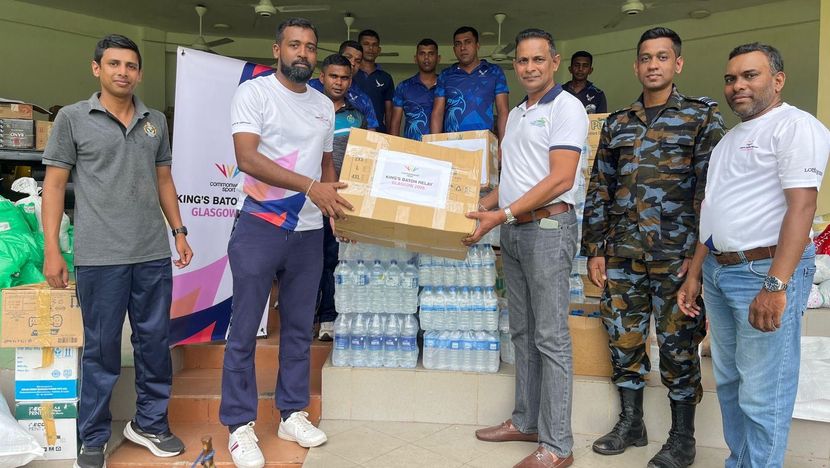
The Commonwealth Games Association of Sri Lanka made the decision to redirect all King’s Baton Relay resources, including staffing, funding, and grant support, towards relief and early-stage recovery efforts. Rather than hosting celebrations, those resources were used to support communities as they began the process of clean-up and rebuilding.
Funding and logistical support were channelled towards providing essential supplies and assisting with early-stage recovery work. This included supporting community-led clean-up efforts, helping restore shared spaces, and offering practical assistance to those whose homes and livelihoods were affected. Particular attention was given to members of the sporting community, recognising that local clubs and facilities often play a vital role as centres of support during times of crisis.
These efforts were delivered in collaboration with national partners and recognised relief agencies to ensure aid reached affected areas efficiently and with dignity. Commonwealth Sport fully supported the approach, acknowledging the importance of placing humanitarian needs first during a period of national distress.
In the days leading up to the cyclone, Sri Lanka had already taken steps to engage young people in the King’s Baton Relay through a Baton Design Competition held on 25 November, with strong participation from state universities. The winning design was later unveiled in the presence of over 60 Athletes, representing more than 20 National Sporting Federations along with members of the public and the wider sporting community, before being placed on public display.
While the King’s Baton Relay did not travel through Sri Lanka as planned, its values, and those of Commonwealth Sport, were carried in action. By choosing compassion, care, and community over ceremony, Sri Lanka demonstrated how the Relay can respond with humanity when people need it most.
