


In St Helena, the King’s Baton Relay unfolded across four days shaped by community, environment and the athletes who will carry the island’s hopes to the Glasgow 2026 Commonwealth Games.
The relay began on 10 April at the New Horizons Youth Club in Jamestown, where the baton was officially launched and St Helena’s team for Glasgow 2026 was presented. More than 100 people attended, including the Acting Governor, the Chief Minister and the Councillor for Sports and Culture. A student from the local secondary school opened proceedings before the focus shifted to sport, with youth club members taking part in activities and meeting the athletes.
The baton designs were revealed during the launch, marking the first time both the baton and team were presented together.
On 11 April, the relay moved to Sandy Bay for a beach clean-up led by athletes, officials and members of the community. The Chief Minister joined local families on the shoreline, where the volume of plastic waste stood in contrast to the island’s remote location.
From Sandy Bay, the baton travelled through Longwood and on to St Helena Airport, with a stop at Longwood Green for a community viewing. The route took in the Millennium Forest, the island’s recycling area and the landfill site, linking the relay to ongoing environmental work across St Helena. It also included a visit to Jonathan, the island’s giant tortoise, where athletes and officials gathered for a team photo.
Travel between locations became part of the experience, with athletes and officials spending the day together as the relay moved across the island.
On 12 April, the focus returned to the ocean with an underwater and waterfront clean-up, followed by a community event at the yacht and dive clubs.
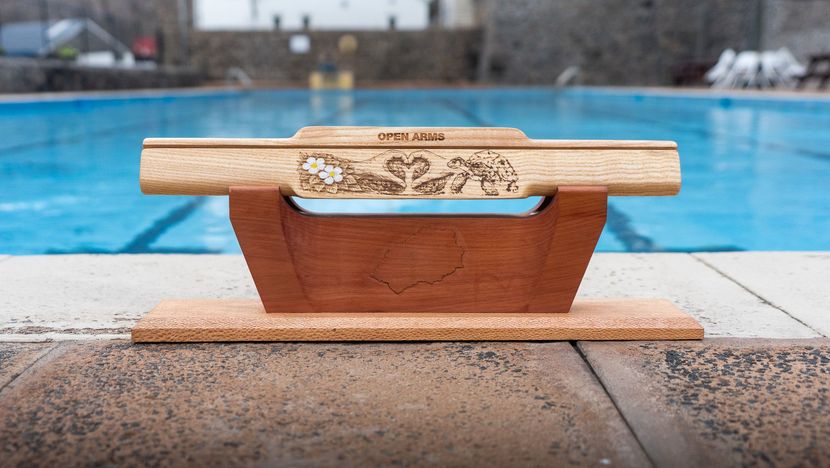
The baton itself reflects St Helena’s identity across three panels, each grounded in the island’s landscape and life.
One side, marked “Saint Helena”, carries a marine scene with a whale shark, turtle and ray, pointing to the island’s connection to the ocean.
A second panel, titled “Open Arms”, brings together flora and birdlife, with Jonathan included within the design, reflecting both community and natural heritage.
The final side, marked “Commonwealth Sport” and “Glasgow 2026”, features running and swimming figures alongside landscape elements, linking St Helena to the wider movement of the Games.
Set on a base carved with the outline of the island, the baton remains rooted in place, a reflection of identity carried forward through the relay.
On 13 April, the relay moved into schools and the wider community, reaching more than 500 young people across the island.
Visits to Key Stage 1 and 2 schools and St Helena Secondary School gave pupils the opportunity to see the baton up close, while a stop at SHAPE, a local initiative supporting people with disabilities and recycling plastics, connected the relay to inclusive community work already under way.
The route also took in Wranghams coffee plantation, High Knoll Fort and the top of Jacob’s Ladder, grounding the baton in some of the island’s most recognisable landmarks.
Engagement continued with visits to emergency services, including Fire and Rescue, ambulance staff, physiotherapy and occupational therapy teams, and the police.
At Francis Plain, athletes and officials came together for a series of baton exchanges, first informally, then with the athletes, bringing the relay back to sport at the close of the programme.
St Helena’s team for Glasgow 2026 includes swimmers William Caswell, Nolan George and Lucas Robertse, alongside athletes Tyler Anthony and Blaze Baldwin. They are supported by officials Anne Dillon, Michelle Yon, Ryan Benjamin, Christine Caswell and Theo Meij.
Across four days, the relay stayed close to what defines St Helena, a small island, outward-looking, shaped by its people and its environment, and connected to something much larger through the Commonwealth.
