The Shifting Order Beneath Netball's Elite
Uganda arrived at Glasgow 2026 having recently climbed above Wales in the world rankings. By the end of their opening match, they had shown why. Wales led 31-28 at half-time, but Uganda took control after the break to win 59-50.
Glasgow brought together the world's top 12 teams as they stood on 1 September 2025, the date used for qualification. Australia, New Zealand, Jamaica, England and South Africa occupied the top five, followed by Wales in sixth, Uganda seventh, Malawi eighth, Tonga ninth, Scotland 10th, Trinidad & Tobago 11th and Northern Ireland 12th.
That order had already begun to change before the Games. Uganda had overtaken Wales to reach sixth, while Tonga had moved above Malawi into eighth. By March, Uganda were 14 rating points clear of Wales, with Tonga eighth and Malawi ninth.
Uganda then showed that their rise was not simply about beating the teams around them. Against Jamaica they led 15-12 after the opening quarter and stayed in the contest until late before losing 55-49. They also pushed New Zealand in a 58-50 defeat. Both Jamaica and New Zealand would go on to reach the final.
Malawi had set the standard for African teams outside South Africa for much of the previous decade. The Queens finished fifth at the Commonwealth Games in both 2010 and 2014 and beat New Zealand 57-53 at Gold Coast 2018. At those same Games, Uganda beat Malawi 54-52 in their first Commonwealth meeting, one of the early signs that the gap between the two sides was closing.
By Glasgow, Uganda were three places above Malawi in the rankings and finished one place ahead of them at the Games. Malawi still had a strong tournament, beating Northern Ireland 64-48 and, more significantly, Tonga 55-49 despite having been overtaken by them in the rankings earlier in the year. They then beat Scotland 54-47 to finish seventh, while Uganda lost 62-54 to South Africa in the fifth-place play-off to finish sixth.
Tonga's tournament showed why the order behind the leading teams remains difficult to predict. Their rise to eighth earned them a first Commonwealth Games appearance, but the step up was obvious in heavy defeats to Australia, South Africa and England. They recovered, beating Northern Ireland 58-52 for their first Commonwealth Games victory before defeating Wales 63-53 in the ninth-place play-off. Wales had been sixth when qualification was decided less than a year earlier; they finished 10th in Glasgow.
The other teams in the lower half produced fewer changes in position, although Scotland came close to a major upset. The hosts led Jamaica during the final quarter before losing 45-43 and went on to finish eighth, their best Commonwealth Games placing. Northern Ireland finished 11th after beating Trinidad & Tobago 78-39, leaving Trinidad & Tobago 12th.
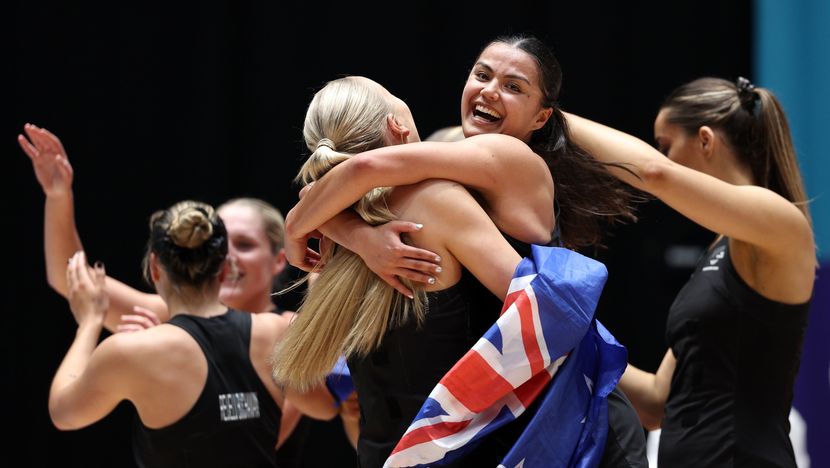
There was change among the leading teams too. Jamaica beat Australia in the semi-final; the first time the Diamonds had failed to reach the Commonwealth Games final since netball joined the programme in 1998. New Zealand beat England 61-54 in the other semi-final before defeating Jamaica 56-48 to win gold, their first Commonwealth title since Delhi 2010.
Australia and New Zealand had contested each of the first five Commonwealth finals. England broke that sequence by winning gold at Gold Coast 2018, while Jamaica reached their first final at Birmingham 2022 and returned to it in Glasgow. The changes have come slowly, but the old pattern is no longer as fixed as it once was.
There remains a substantial gap between the leading sides and those chasing them, and Glasgow produced enough heavy scorelines to make that clear. Uganda have moved ahead of Wales and Malawi, Tonga have climbed into the top eight, and Scotland came within two goals of Jamaica. The gap to the elite remains, but the old order behind them is beginning to shift.