Glasgow 2026 ends with history across the Commonwealth
Glasgow 2026 completed its sporting programme with history across the Commonwealth on Sunday as Wales’ Emma Finucane achieved an unprecedented four-gold sprint sweep and Matthew Bostock claimed the final title of the Games for the Isle of Man.
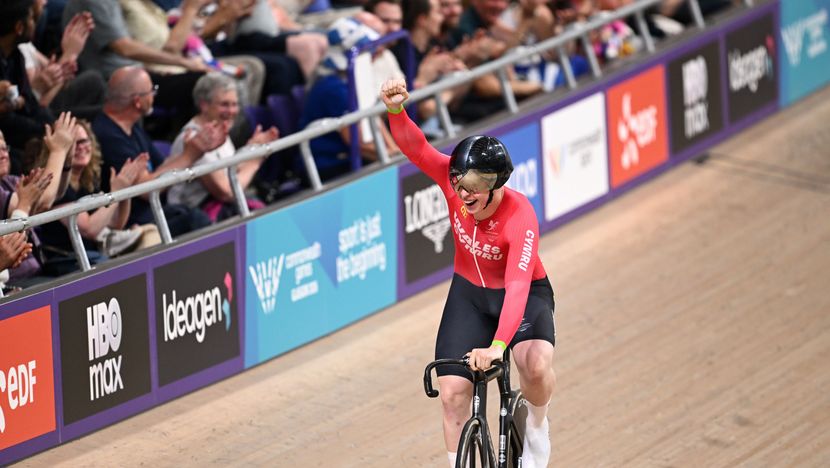
Finucane became the first sprint cyclist to win four track gold medals at a single Commonwealth Games, adding the women’s keirin title to victories in the team sprint, individual sprint and 1,000m time trial.
The Welsh rider completed her quartet across four successive days at the Sir Chris Hoy Velodrome, with defending Commonwealth champion and Olympic champion Ellesse Andrews of New Zealand taking silver in the keirin.
Bostock later brought 11 days of competition to an end by winning the men’s points race, ensuring the final gold medal of Glasgow 2026 went to one of the Commonwealth’s smallest nations.
The closing day reflected the wider reach of the Games, with Cyprus winning its first gold of Glasgow 2026 and Tonga, Guernsey and Norfolk Island securing rare and historic medals.
Giannis Antoniou ended Cyprus’ wait for gold in the penultimate event of the entire sporting programme, defeating Australia’s Kayhan Ozcicek-Takagi to win the men’s over-100kg Judo title.
Paula Monta earned bronze in the same event to deliver Tonga’s only medal in Glasgow. It was the nation’s fourth Commonwealth Games medal and its first in Judo.
England’s Emma Reid retained her women’s under-78kg Judo title, defeating Australia’s Maria Swan with an ippon to add Glasgow gold to the crown she won at Birmingham 2022.
At the Bowls, Ali Merrien opened Guernsey’s medal account with silver in the women’s singles after England’s Katherine Rednall won the final in straight sets.
Shae Wilson defeated Malaysia’s Emma Firyana Saroji to secure bronze for Norfolk Island. It was the nation’s first medal of Glasgow 2026 and only the third it has won in Commonwealth Games history.
Northern Ireland also finished with gold as Gary Kelly and Adam McKeown defeated England’s Nick Brett and Jamie Walker in the men’s pairs final.
New Zealand returned to the summit of Commonwealth Netball for the first time since Delhi 2010, beating Jamaica 56–47. The Sunshine Girls were denied a first title but collected a second successive silver after reaching their first Commonwealth final at Birmingham 2022.
The final Para Bowls and Para Track Cycling titles completed the largest Para-sport programme in Commonwealth Games history, with a record 47 medal events staged across six fully integrated Para sports.
Australia’s Tara Neyland broke her own world record in the women’s C4–5 1,000m time trial, while compatriot Louise Hoskins became the oldest Commonwealth Games gold medallist at the age of 76 after winning the women’s B6–B8 Para Bowls pairs with Serena Bonnell.
Glasgow 2026 brought together more than 3,000 athletes and Para athletes from 74 nations and territories, with 215 titles decided across ten sports in a compact Games built around four existing venues.
Australia completed another dominant Games at the top of the medal table with 171 medals, including 70 golds. England finished second with 110 medals and 29 golds, while Canada took third with 62 medals and 19 golds.
India and hosts Scotland finished joint fourth, with both nations collecting 29 medals, including 13 golds.
The compact Glasgow Games will now give way to a larger event in India, where Amdavad will host the Centenary Commonwealth Games in 2030.
Between 15 and 17 sports will feature as the Games mark 100 years since the first edition was staged in Hamilton, Canada, in 1930. The confirmed programme already includes Athletics and Para Athletics, Swimming and Para Swimming, Table Tennis and Para Table Tennis, Bowls and Para Bowls, Weightlifting and Para Powerlifting, Artistic Gymnastics, Netball and Boxing.
The Games concluded with a Closing Ceremony at The Hydro, headlined by Simple Minds, before Glasgow handed over to Amdavad, host of the Centenary Commonwealth Games in 2030.